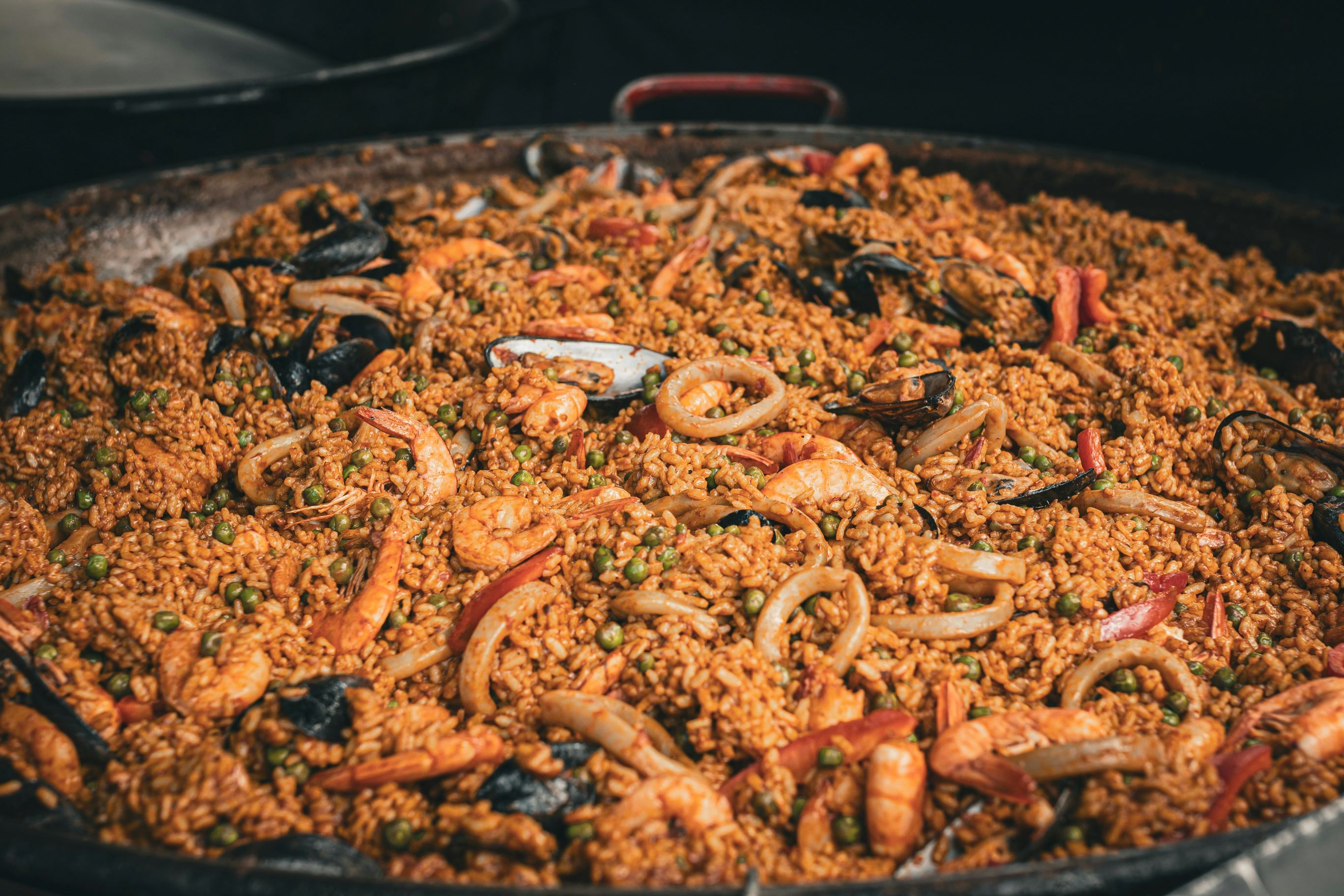
Andalusia is a region where history and everyday life sit down at the same table. Every dish here carries its own meaning: in a casual conversation about food, you might hear stories from the Caliphate of Córdoba or memories of a grandmother who spent half her life frying pestiños in the oil from her own olive trees.
Olive oil – a heritage that tastes like gold
Few people realize that nearly half of the world's olive oil production comes from Spain, and about 80% of that originates in Andalusia. In the province of Jaén, there are more than sixty million olive trees—more than the entire population of the country. The tradition of pressing olives goes back to the Phoenicians, but it was the Romans who turned this land into the Empire's great "oil garden." As early as the 1st century AD, ships loaded with amphorae sailed from what is now Cádiz to Rome. Fragments of those amphorae can still be seen in Rome's "Monte Testaccio," the hill made of discarded Roman waste.
In Jaén and its surroundings, olive oil has a unique status. There are tasting schools where young farmers learn to recognize subtle flavors and aromas—just like sommeliers do with wine. Here, oil is valued not only for its taste but also for its "green": that luminous hue of freshly pressed liquid.
Seville's oranges – the scent that holds centuries of history
In spring, Seville is literally immersed in the perfume of orange blossoms. The trees lining the streets were planted during the Almohad Caliphate in the 12th century—not just as decoration, but to purify the air. Today that fragrance has become one of the city's defining signatures. From those same bitter oranges comes the famous Seville marmalade, exported to the United Kingdom since the 19th century. There's even a little-known custom: during Holy Week, some women hang baskets of oranges and roses from their balconies so the scent mingles with the incense filling the processions.
Where does gazpacho come from?
The classic Andalusian gazpacho, now a global symbol of Spanish summer, has origins far older than the tomato. In its primitive form, back in Roman times, it was a simple mix of garlic, bread, water, and oil—a meal for farmers working under the blazing sun. Only after the discovery of America, when tomatoes arrived in Europe, did gazpacho take on the red color we know today. Interestingly, in the province of Córdoba, they still prepare salmorejo—a thicker, creamier version served with chopped hard-boiled egg and slivers of Iberian ham.
The forgotten wine that was reborn in the south
Andalusia isn't just about olive oil and oranges—it's also one of Europe's oldest wine cradles. The Romans called this land regio vinosissima, the "very wine-rich region." The wine from Jerez de la Frontera—sherry—faded for centuries until 18th-century British merchants rediscovered its character. They were the ones who popularized the name "sherry," and Andalusians still joke that without the English, no one would have thought of aging a wine for twenty years just to sell it in Liverpool.
In Jerez, they use the solera aging system, blending young wines with older ones. Each bottle thus contains a piece of past harvests, sometimes decades old. The result is a wine with memory—layers of time and history in every sip.
The cuisine that follows the rhythm of the day
In Andalusia, no one sees food as a mechanical act—it's part of life, its very breath. The midday heat sets the schedule: the main meal is around 2 p.m., and dinner rarely starts before 10. That slow pace isn't laziness; it's adaptation. Here they say "la prisa mata" (haste kills), and eating quickly would be a small sacrilege.
As evening falls, shutters open halfway, the air fills with guitar music, and wine cools the conversation. Andalusia blends past and present with natural ease, and its cuisine—simple, honest, full of character—remains the truest reflection of what its people have learned over the centuries: that even the humblest dish can tell the story of an entire people.